-
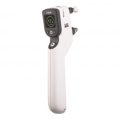
 This handheld circular pupillometer device is used for measuring different size pupils. It was developed and researched by Dr. Jack Richman, O.D., as part of the Massachusetts Drug Evaluation and Classification Program (MDEP). This pupil measurement device is used by law enforcement officers across the country to assist in determining whether people are possibly impaired and/or under the influence of drugs. The reverse side has expected pupil size in different lighting conditions for non-impaired people. Item #: LV3553000
 -
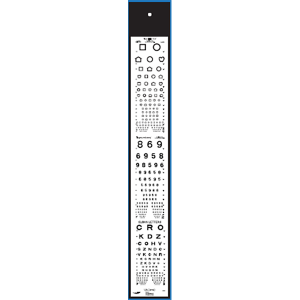 Designed for use in manual Chart Projectors including products from: R.H. Burton, Marco, Reichart, Topcon, and Woodlyn. Includes test for: → LEA Symbols® 20/100 – 20/10 (18 Lines) → LEA Numbers® (16 Lines) (Multiple Lines 20/50 – 20/10) → Sloan Numbers 20/100 – 20/10 (16 Lines) (Multiple Lines 20/50 – 20/10) Item #: VA3202
 -
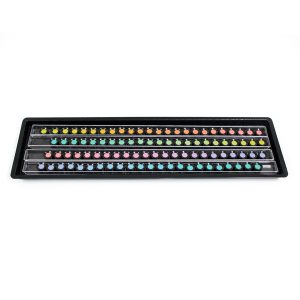
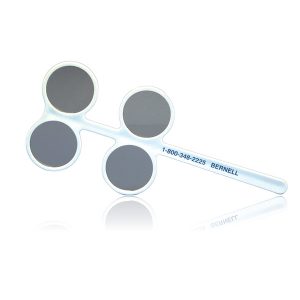 Four-well flipper bar features two sets of lenses to alternate demand. Used with Tranaglyphs or Vectograms to reverse BI/BO demands. Item #: BC1270POL
 -
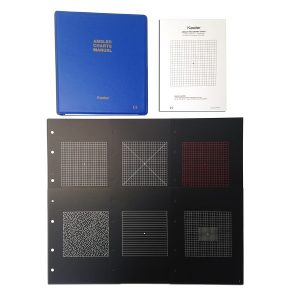 Amsler Chart Book Test for metamorphopsia, maculo-pathy and retino-pathy. Imported from England Includes six grids as pictured Instructions Included 5-1/2" x 8-1/2"
 -
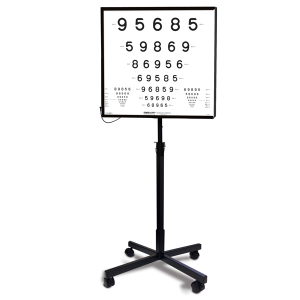 The ESC2000 Illuminator Cabinet provides a uniform retro-illuminated testing surface, ideal for clinical testing of high contrast and low contrast LogMAR tests, including ETDRS, Lea Symbols, Lea Numbers, Landolt C, etc. The cabinet utilizes a pure-white LED light source. (Stand not included. Can be purchased separately. Part # GL50004)
 -
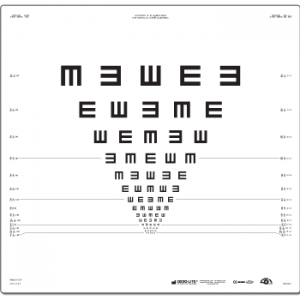 Illiterate Tumbling E ETDRS vision chart with proportionally spaced (geometric progression) lines; line sizes range from 20/200 to 20/10 (6/60 to 6/3) equivalent.
 -
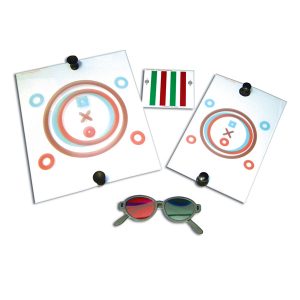
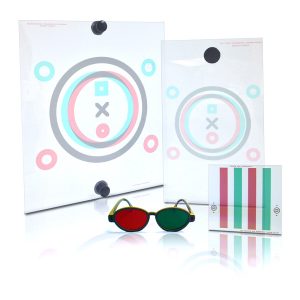 Red/Green TV trainer or can be placed on a printed page and used as a reading unit. Used to build binocularity in true space.
 -
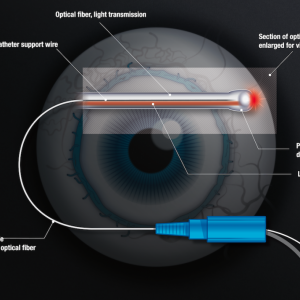
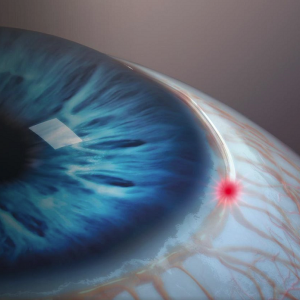
The optimum in minimally invasive, canal-based glaucoma surgery
With a mild touch and manifest efficacy, ABiC™ performed with the iTrack™ surgical system is a comprehensive minimally invasive glaucoma surgery that can effectively reduce IOP and eliminate or reduce the medication burden. Restorative and atraumatic, ABiC™ can be performed across the entire glaucoma disease process – and in conjunction with other treatments and MIGS options. -
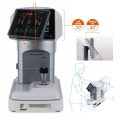
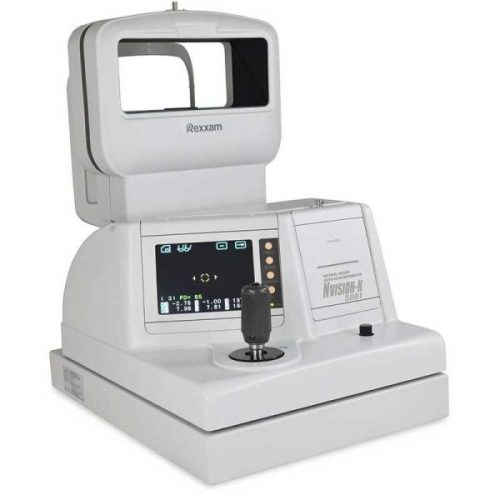 Natural Vision Auto Ref-Keratometer Natural Vision Auto Ref-Keratometer NVISION-K5001 is a unique Auto Ref-Keratometer that allows the patient to look through a very wide window. This feature helps the patient relax during the measurement as looking through a window with both eyes can minimise instrument accommodation.
 -
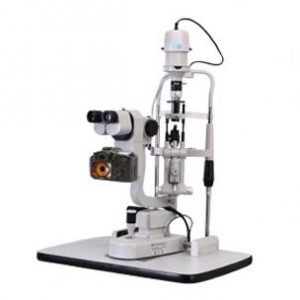 Professional image analyzing, processing and management system Professional optics with high definition digital SLR camera (16.2 Mega Pixels) Special case storage system Professional software with high definition video function Background illumination system
 -
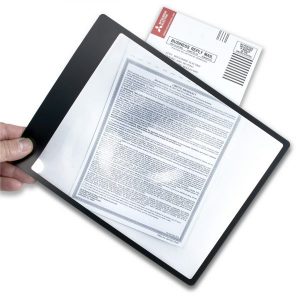
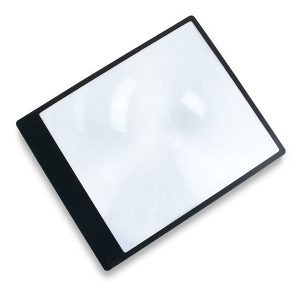 The DM-11 MagniSheet from Carson is a 2x power full page, flexible, fresnel magnifier within a black bordered frame. It is very lightweight and thin which makes it easy to transport. To use, simply hold the MagniSheet approximately 4 inches above your subject. This 2x power full size page magnifier is a great low vision reading aide for books, newspapers, magazines, maps, inspection and for other hobbies, crafts and tasks.
 -
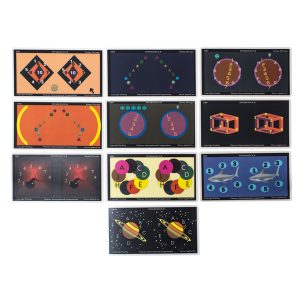 Morgenstern Color Fusion Cards - Divergence B Used with Bernell-O-Scope™ Builds large ranges of vergence (pull all the way in and out). Work in and out of instrument. Hold in space and fuse, diverge, move fused targets and also converge some. Made for "tromboning" work in the stereoscope as well as "pointing". Each card features eclectic designs and unique arrangements. Item #: SMDB
+65 6514 0848|info@ophthalmic.com.sg